Film stills of Part 02


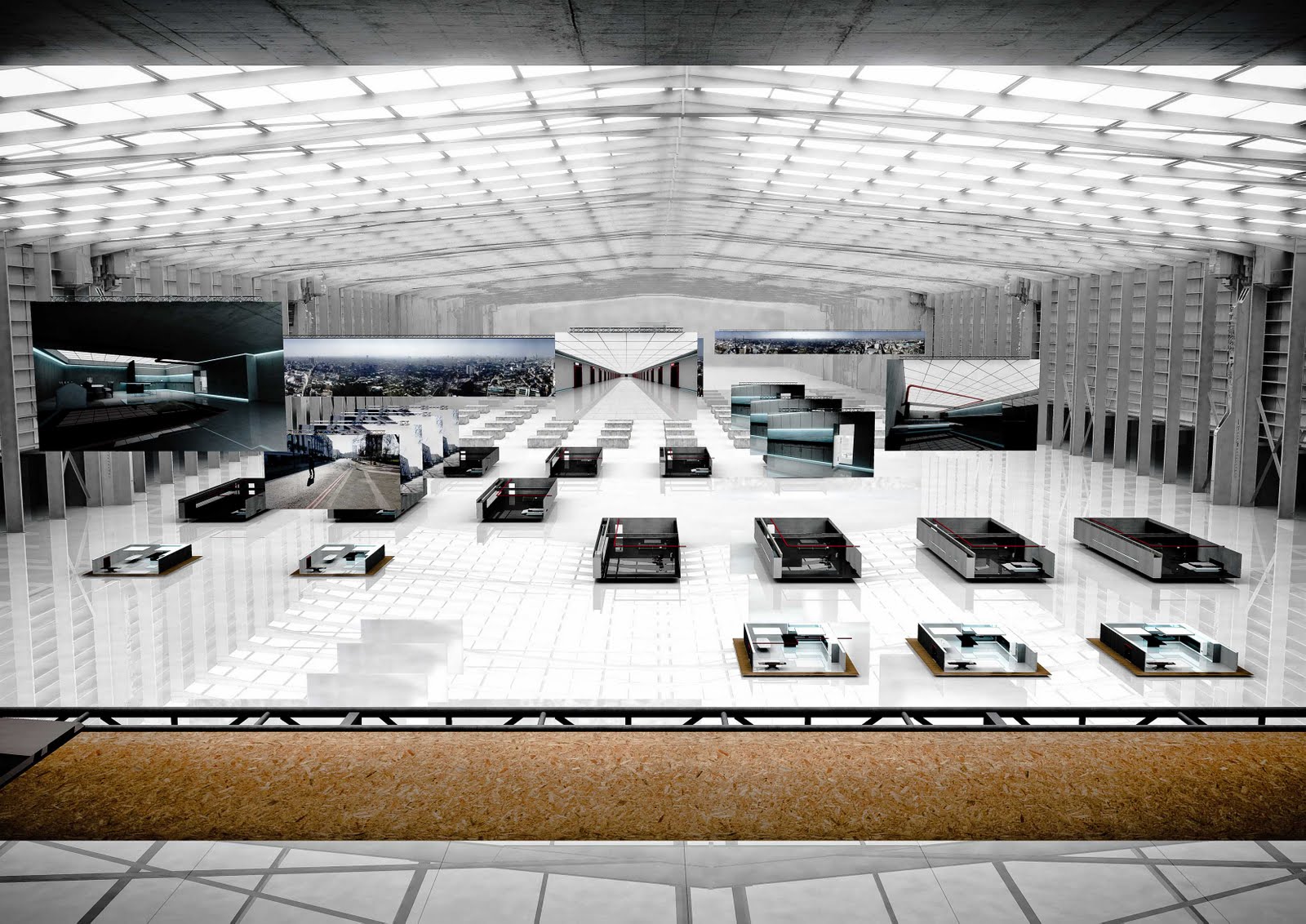


This outline spatial proposal is something that I have been formulating over the past week. It began with an iteration as posted a few days ago and has now developed into this. The idea behind this was to try and develop a series of spaces that would feature in the film. I wanted all of these spaces to draw some sort of connection from the spaces that precede and follow them. One of the main points is that the spaces would all be constructed as temporary representations of spaces that we can usually associate with quite comfortably. Due to the temporary nature of these spaces they have started to be realised within a much larger spatial volume which at this moment in time is not fully defined, probably some sort of infinite warehousey space/tower block that is situated in what used to be London.


 Capturing the main moments in the film, this drawing represents the moments at which the mind of Jed slips into his synthetic creations of urban landscapes induced by his consumption of film and the perceptions he builds up of filmic geographies.
Starting with the idea that architecture exists within film there occurs a formation of boundaries between narrative, production and existing space. ‘Movies and cities have different kinds of temporalities, and are constituted, through different imperatives, of various spaces and events’. It is these events that form the blurred boundaries between the three above-mentioned types of space.
Narrative space will always take ‘place’. It is this translation from narrative to place that presents an analytical viewpoint through which the imagined or perceived world of the film simultaneously occurs with the referential aspects of the film itself taking ‘place’. As a viewer, and individual, that experiences space, both imagined and materialized, there is a consideration towards the film whereby attention and perception of space must slide between the location of the fiction and the real world that the film resides within.
Individual perception and experience of space are what I think will drive the content of the project. Through analysis of existing space I wish to dissect selected cinematic spaces that, through visual digestion influence and inform our experiences of landscapes. By stating that there are three main architectures of cinematic space the analysis of these will produce a newly formed composite space comprised of the three aspects that contribute to an individuals perception.
The choice of specific location could be endless so I may choose one film or theme that is set or part set in London as a starting point for the investigation. The main focus will be on the formation of new spaces constructed out of the processes behind filmmaking itself. Elements such as logic behind the narrative form geographies of the city and some times impossible geographies for example in situations when the camera is used to cheat and bend the reality of space to conform to the needs and requirements of the production process and the direction of film. The production process itself whereby physical entities are used to create synthetic space that form part or entire sequences of the motion picture. Fabricated landscapes, such as built sets or virtual environments are the physical and virtual constructs of the cinematic spaces that exist in fiction and non-fiction. This leads to the final contrasting architecture, which resides in reality. Location shoots for instance, occur in the realm of everyday life and there then becomes a duality of existence between the two. Where do the borders of the cinematic space end and the borders of reality begin? At anyone site of filming there will always be a governing force through which the blurry borders occur, and this is governed by what the camera sees and intends to show the viewer. It is only when you step just outside of this zoning that the blurred borders become apparent. From this establishment of cinematic space you can then begin to break down how any one space involved in the process of film production defines multiple borders that respond to time, physical and metaphysical based parameters.
What comes from the aforementioned components of film is the ability of individuals to consume this information, digest it and form perceptions of what cinematic spaces look, feel and act like. Obviously from one film to the next the experience of space may differ but it is these variations in experiential visual space that all combine to allow ones mind to enter into the fictional or non-fictional existence of filmic space. Further to the cinematic space contained within the duration of any film it is important to also understand how these visions and interpretations of space contribute to the data bank of information we hold within our minds of landscapes. Can one fully understand a space simply through the visual portrayals of it in cinema and how do these interpretations affect the experiences we may have or have had of existing space.
At this moment in time the over-riding interest I have in these issues is how the fabrication of physical or virtual environments form the elements, landscapes or even worlds of the narratives found within film. Further to on screen existence they are obviously conceived through various processes of thought and one in particular is how they may be formed and arranged with respect to the cheating of space though camera techniques, requirements and visual manipulation. It is these environments that I wish to draw focus to and begin to dissect and illustrate how that no matter what level of reality they may hold they will all have to exist somewhere and it is that somewhere which I intend to create the proposition of cinematic architecture within.
The cinematic city will be constructed out of multiple spaces and composited together. The imagined landscapes of the city will grow out of the abstraction of the pragmatisms and logistics of film making processes.
